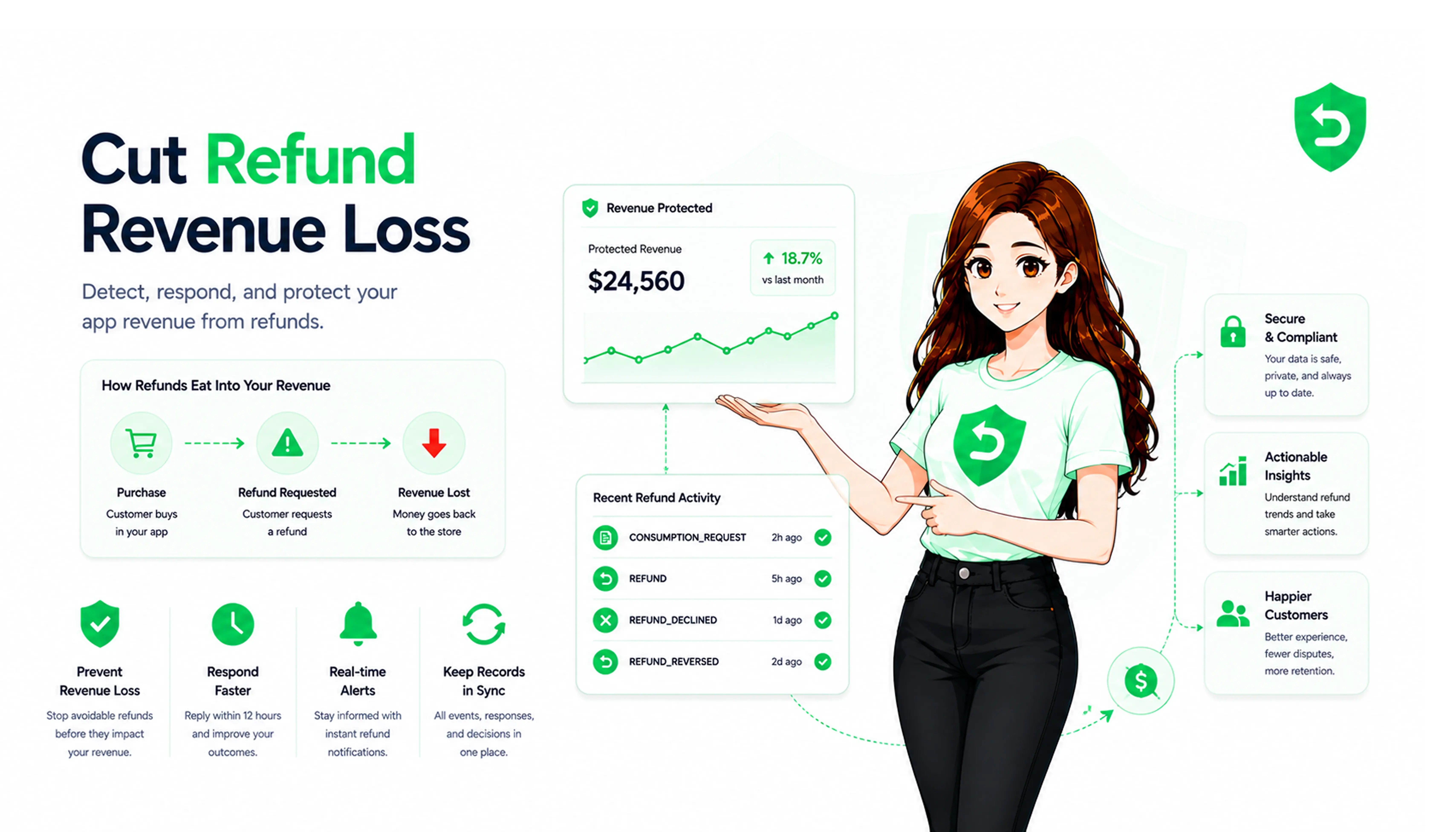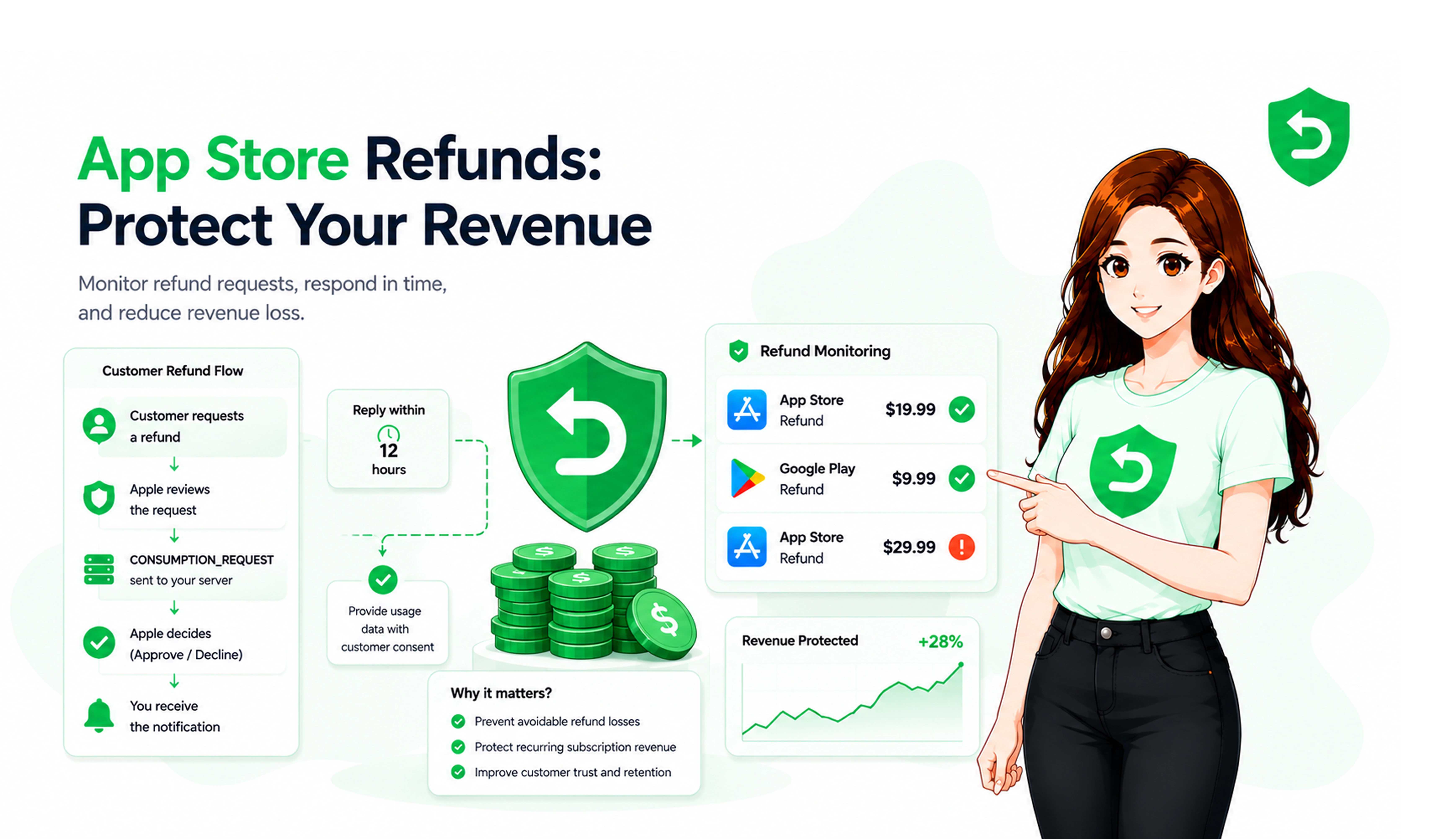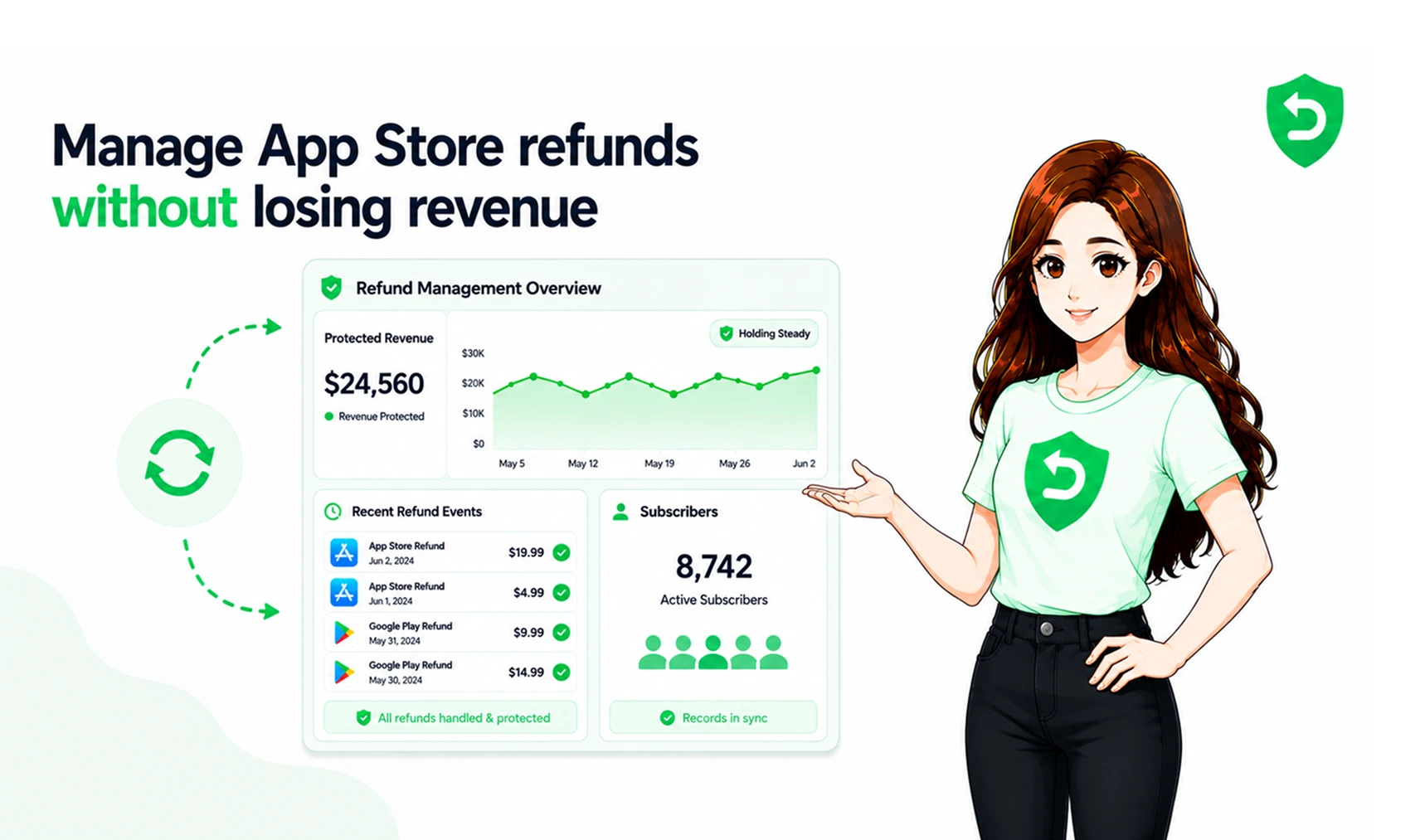

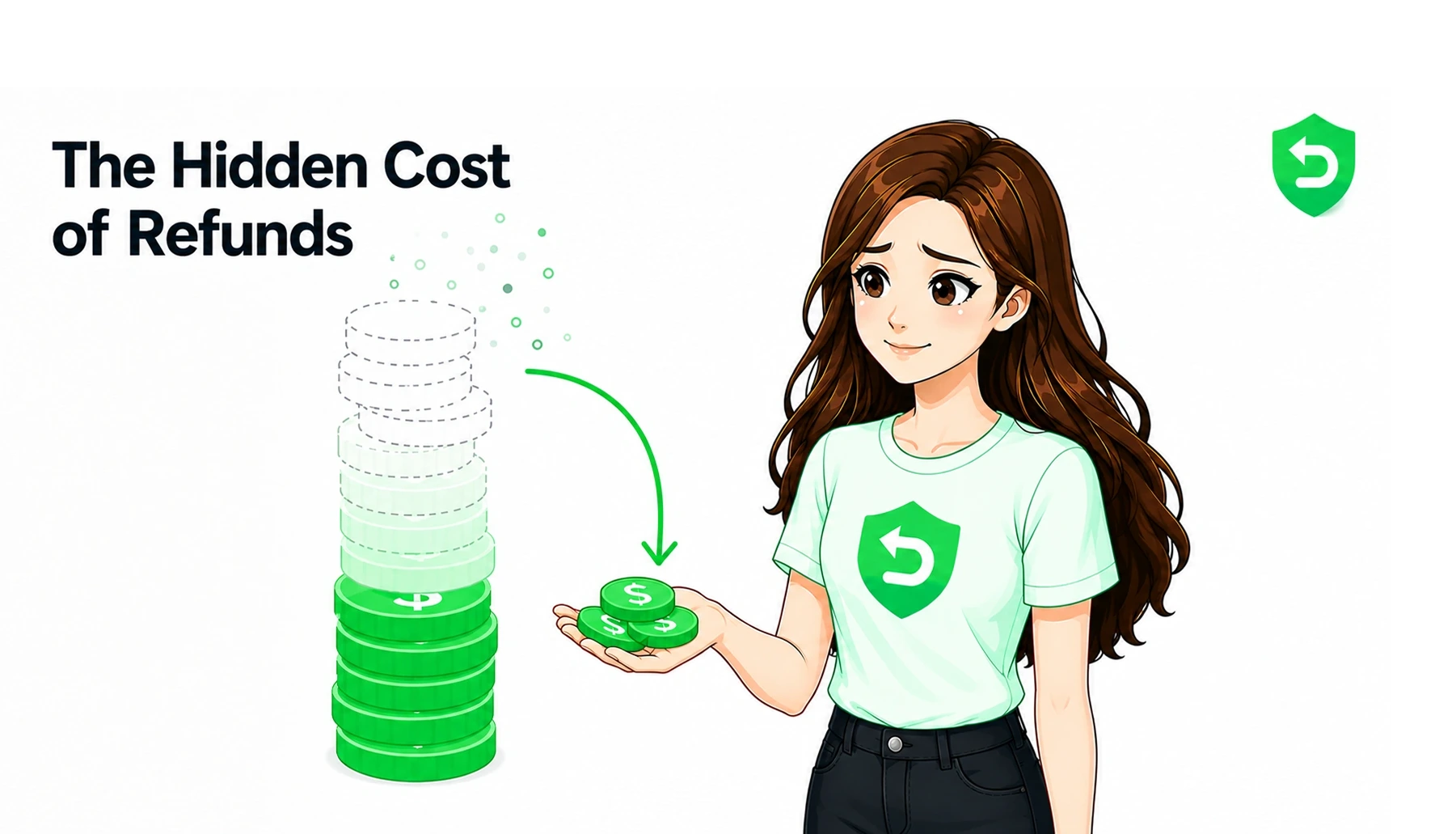
Quick answer: Refunds cost more than the sticker value of the refunded purchases, because the total includes the money returned, the fees you don't get back, the acquisition cost you already spent to win that customer, and the lifetime value that walks away with them. Most developers underestimate the number badly, because refunds never appear as a single line item. And a real share of that total isn't a loss you have to accept, it's recoverable, if you respond to the contestable requests in time.
Why refunds are invisible in your P&L
Here's why refunds are so easy to underestimate: they never arrive as one clear number. A refund quietly reverses a transaction that already happened. The revenue was booked, then un-booked. There's no "refund losses" line in your dashboard the way there's a line for revenue or ad spend, so the cost is spread thin and mostly unseen.
That invisibility is expensive. When a cost doesn't show up as a number, it doesn't get managed. Most developers have a rough sense that "we get some refunds," and almost none can tell you what refunds cost them last quarter or how much of it they could have prevented. The first step to doing anything about refunds is making the cost visible. A simple refund cost calculation can turn that invisible loss into a number you can actually manage.
The four real costs of a refund
The sticker price of the refunded purchase is only the beginning. A single refund actually costs you four things:
The returned revenue. The money itself goes back to the customer. This is the obvious part, and the part most people stop at.
The fees you don't recover. Depending on timing and store, some processing and platform costs associated with the original transaction aren't fully recovered on a refund, so a refunded sale can cost more than a sale that never happened.
The acquisition cost you already spent. You paid to acquire that customer, ad spend, ASO effort, referral incentives. A refund means you paid to acquire someone who generated no net revenue, so your effective customer acquisition cost on the rest of your users quietly rises.
The lost lifetime value. A refunded customer usually churns. So you don't just lose one purchase, you lose the renewals and expansion revenue that customer would have produced, which for a subscription app is often the largest cost of all.
Add those together and the true cost of a refund is a multiple of the refunded amount, not equal to it. That's the number worth knowing. For a subscription business, this is the real subscription refund loss, not simply the amount returned on a single transaction.
A simple way to estimate your refund cost
You don't need a data team to get a useful estimate. Pull four numbers you already have and multiply:
Monthly refunds (count of refunded transactions)
Average refund value (typical refunded purchase amount)
Your blended CAC (what it costs you to acquire a paying customer)
Your average customer LTV (what a retained customer is worth)
A rough monthly refund cost looks like:
(Monthly refunds x average refund value), the direct revenue returned
+ (Monthly refunds x CAC), the acquisition spend wasted on churned customers
+ (Monthly refunds x lost LTV beyond the refunded purchase), the future revenue that leaves
Even a conservative version of this math usually surprises people, because the CAC and LTV components, the invisible two-thirds, dwarf the returned revenue alone. Run this refund cost calculation with your own numbers before reading on; the result is the reason this post exists.
How much of it is recoverable
Here's the part that turns a depressing number into an actionable one. Not all of that cost is fixed. Refunds split into two buckets:
Genuine dissatisfaction, customers the product let down. These usually should be refunded, and the fix is product work, not contesting. (See Do Refunds Hurt Your App Store Ranking.)
Contestable leakage, trial abuse, use-and-refund, and false "accidental" claims, where value was clearly delivered. These you can respond to, and a share of them are recoverable if you answer inside the window. (See refund abuse patterns.)
These recoverable refunds are the contestable bucket that you're currently losing by default, because the request arrived at 3am, or on a weekend, and nobody responded in time. That's not a cost of doing business. That's leakage with a fix. (See The 12-Hour Window.)
Turning the estimate into action
Once you've seen the number, there are exactly two levers:
Shrink genuine refunds by fixing the product and purchase friction that causes them, clearer trials, honest paywalls, delivering on what's sold. Slower, but it lowers the whole curve.
Recover contestable refunds by responding to every eligible Apple and Google Play request inside the window. Fast, and it's the part that's leaking for no reason but timing.
RefundSensor addresses the second lever directly and makes the first one visible: it responds to eligible refund requests automatically inside the window, and its analytics show your refund revenue impact broken down by app and by reason, so you can finally see the invisible number, watch how much of it is recoverable, and track what you're actually recovering over time.
For developers looking for an app refund automation tool, this approach turns refund recovery from a manual task into a measurable part of subscription revenue management.
Further reading
[The 12-Hour Window: Why Most Developers Lose Refunds by Default]
[Refund Abuse: Trial Abuse, Use-and-Refund & How to Spot the Patterns]
See the invisible number, and how much of it you can get back. RefundSensor breaks your refund cost down by app and reason, responds to every eligible Apple and Google Play request inside the window, and tracks what you recover over time. For teams comparing refund recovery software, the goal is to see the cost, identify the recoverable portion, and measure what comes back. Start free
Preguntas frecuentes
More than the refunded amount. The true cost includes returned revenue, unrecovered fees, the acquisition spend wasted on a churned customer, and the lost lifetime value, often several times the sticker value of the refund itself.
Because refunds never appear as a single line item. A refund quietly reverses a booked transaction, so the cost is spread across your metrics and mostly invisible, which means it rarely gets managed.
Multiply monthly refunds by average refund value, then add the wasted acquisition cost (refunds x CAC) and the lost future value (refunds x LTV beyond the refunded purchase). The acquisition and LTV components are usually the largest.
The contestable portion you're currently losing to a missed response window, trial abuse, use-and-refund, and false "accidental" claims. The exact share varies; see the recovery data above from the Refund Index.
The recoverable portion leaks for one reason, nobody responded in time, and closing it is near-zero ongoing effort once automated. That makes the recoverable refunds close to free money relative to the cost of winning a new customer.