
Google Play Chargeback Prevention: How to Protect App Revenue
A Google Play subscription can look like clean revenue the moment it clears. Weeks later, a customer disputes the charge, the bank reverses it, and that sale becomes a loss with a fee attached. The money was never really yours to count.
That gap between a payment that succeeds and one that sticks is the heart of Google Play chargeback prevention. It is less about blocking every dispute and more about cutting the avoidable ones, spotting the risky ones, and reacting in time. If you sell subscriptions on Android, it helps to see how refund and chargeback defense works on Google Play before the losses show up in a report.
Key Takeaways
• A Google Play chargeback is a bank-led reversal, and since August 2026 the cost falls on the developer.
• You cannot eliminate chargebacks, but you can reduce the avoidable ones and contest the rest.
• Preventing, monitoring, and handling chargebacks are three different jobs, and revenue protection needs all three.
• Most disputes trace back to unclear billing, failed renewals, or fraud.
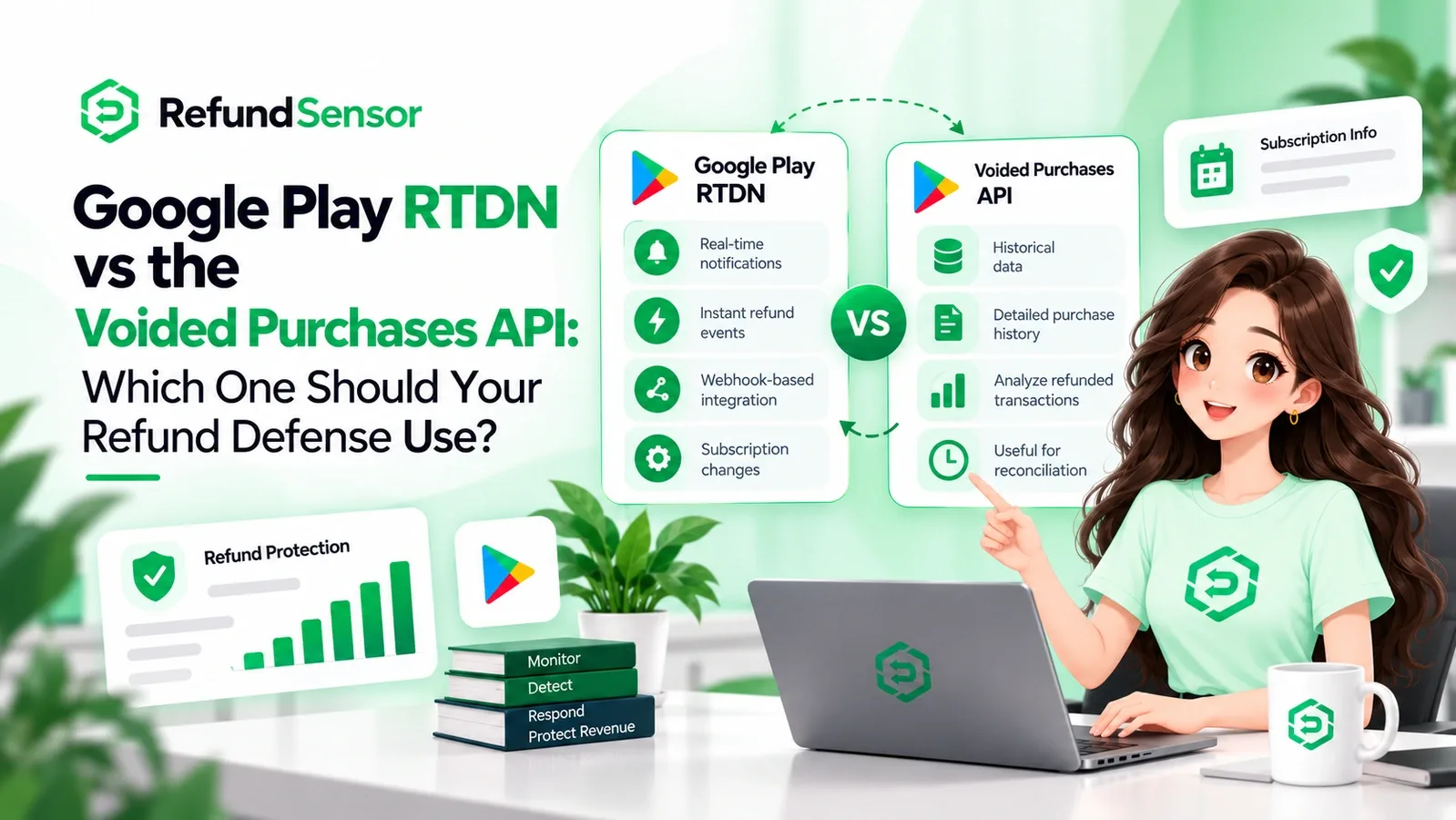
• The Voided Purchases API and Real-time Developer Notifications help you see reversals early.
• A subscription chargeback hurts more than a one-off refund because it erases projected lifetime value.
What Is a Google Play Chargeback?
A Google Play chargeback is a payment reversal a customer starts through their bank, not through Google or your support. Google acts as merchant of record and handles the dispute, but the reversed money comes out of your revenue.
Five events often get mixed up, so it helps to keep them separate:
• Refund: money returned inside Google Play, started by you or by Google.
• Chargeback: a reversal forced by the customer's bank.
• Cancellation: the customer stops a subscription, with no money returned by itself.
• Billing failure: a renewal payment that does not go through.
• Voided purchase: any purchase later refunded, charged back, or canceled, surfaced through the Voided Purchases API.
Why Do Google Play Chargebacks Happen?
Chargebacks happen when a customer disputes a charge with their bank instead of asking you first. The usual reasons are an unrecognized charge, confusion about a trial or renewal, an accidental purchase, or outright fraud.
Each cause needs a different fix. Unclear billing is a content and design problem. Fraud is a detection problem. Knowing which one you face tells you where your effort pays off.
How Does the Google Play Chargeback Process Work?
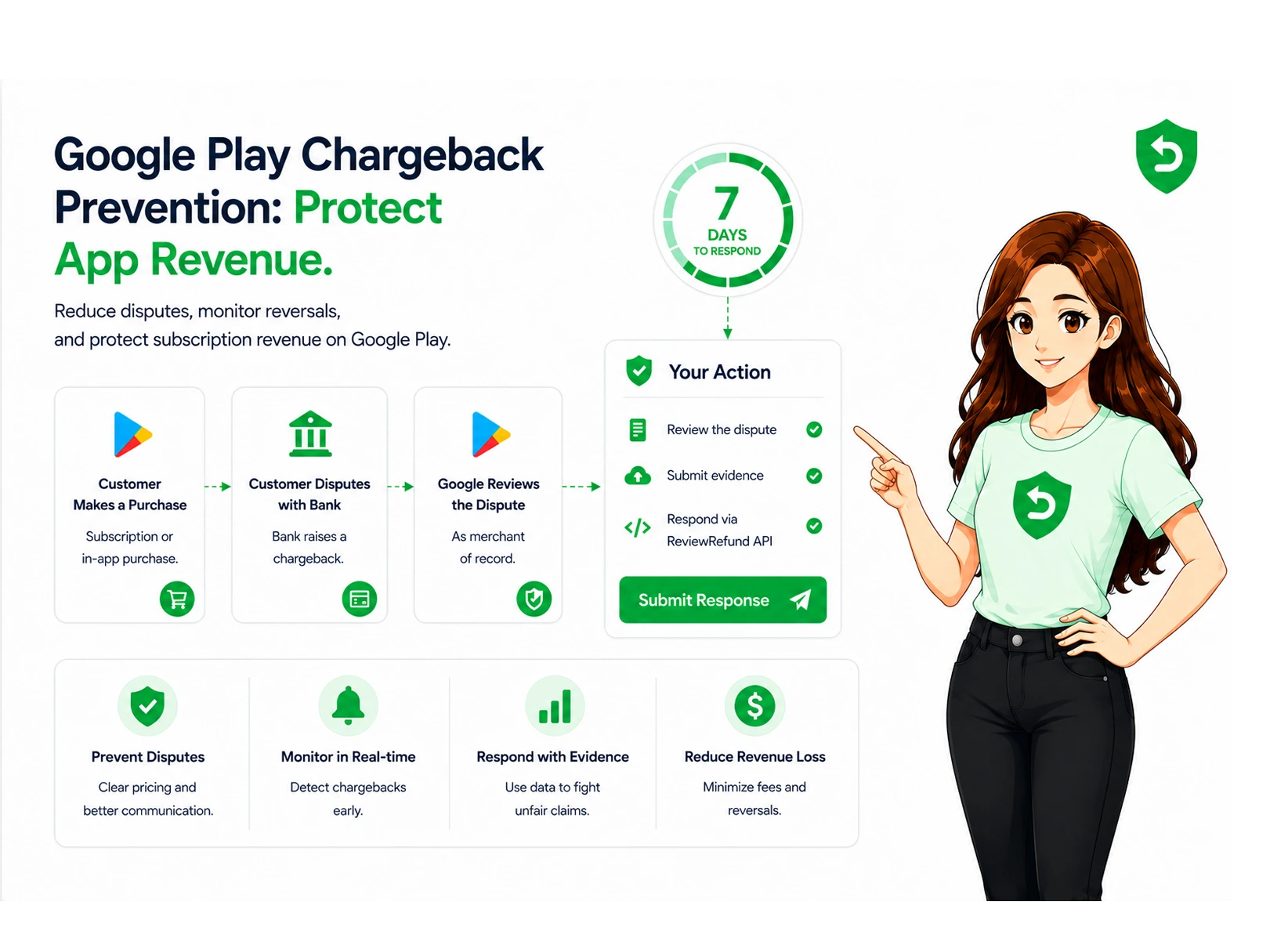
A customer disputes a charge, the bank routes it to Google, and Google reviews it as merchant of record. For cases that need your input, Google sends a review notification and gives you a short window to respond with evidence before it settles the dispute with the bank.
The rough flow:
1. The customer buys a subscription or in-app item.
2. A billing issue or complaint leads them to dispute the charge with their bank.
3. The bank sends the dispute to Google.
4. Google may send a PendingRefundReviewNotification over Real-time Developer Notifications.
5. You respond within the review window through the ReviewRefund API, and the reversal hits your revenue if the dispute stands.
Google explains the review flow in its guide to disputing chargebacks, and the cost split is set out in the Play Console Help. Anything outside those docs here is analysis, not policy.
Can Developers Prevent Google Play Chargebacks?
Not completely. No developer can stop a customer from calling their bank. What you can do is reduce the avoidable disputes, catch risky situations early, and respond to the billing events that matter. Prevention means fewer, cheaper, and contested chargebacks, not zero.
How to Prevent Google Play Chargebacks and Protect App Revenue
You prevent chargebacks by making billing clear, keeping accurate records, and reacting fast to billing events. Clear terms cut the confusion disputes, good records let you contest the rest, and monitoring catches problems before they become reversals.
Practical steps that move the number:
• Show price, trial length, and renewal date before checkout.
• Explain when a trial turns into a paid plan, and remind the user before it does.
• Keep accurate purchase and entitlement records tied to each user.
• Handle failed renewals with grace periods instead of silent cutoffs.
• Watch subscription status changes for cancellations and refunds.
• Flag unusual refund or chargeback patterns on an account.
Chargeback Cause | Developer Risk | Prevention Approach |
Unrecognized charge | Dispute filed with the bank | Clear billing descriptor and in-app receipts |
Trial confusion | I did not authorize claims | Show the conversion date and remind before renewal |
Accidental purchase | Fast refund or chargeback | Add a confirmation step and easy cancellation |
Badly handled renewal | Frustration turns into a dispute | Use grace periods and clear billing reminders |
Fraud or stolen card | Hard-to-avoid loss | Run risk checks and flag repeat patterns |
Common Chargeback Prevention Mistakes Developers Make
The usual mistakes are hidden renewal terms, no monitoring of reversals, no link between a purchase and a user, and treating chargebacks as a support afterthought. The quiet killer is having no record to answer with. If you cannot tie a dispute to a real user and real usage, you cannot argue it, and the loss stands by default.
How Chargebacks Affect Subscription Revenue
A chargeback does not just remove one payment. On a subscription, it can wipe out months of expected value, add a bank fee, and skew your revenue numbers. It also adds support and billing work, and makes forecasting less reliable when closed revenue keeps reversing.
Key Insight A one-off refund costs you a sale. A subscription chargeback costs you the sale, the bank fee, the future renewals you projected, and your team's time sorting it out. |
Chargeback Monitoring and Revenue Protection
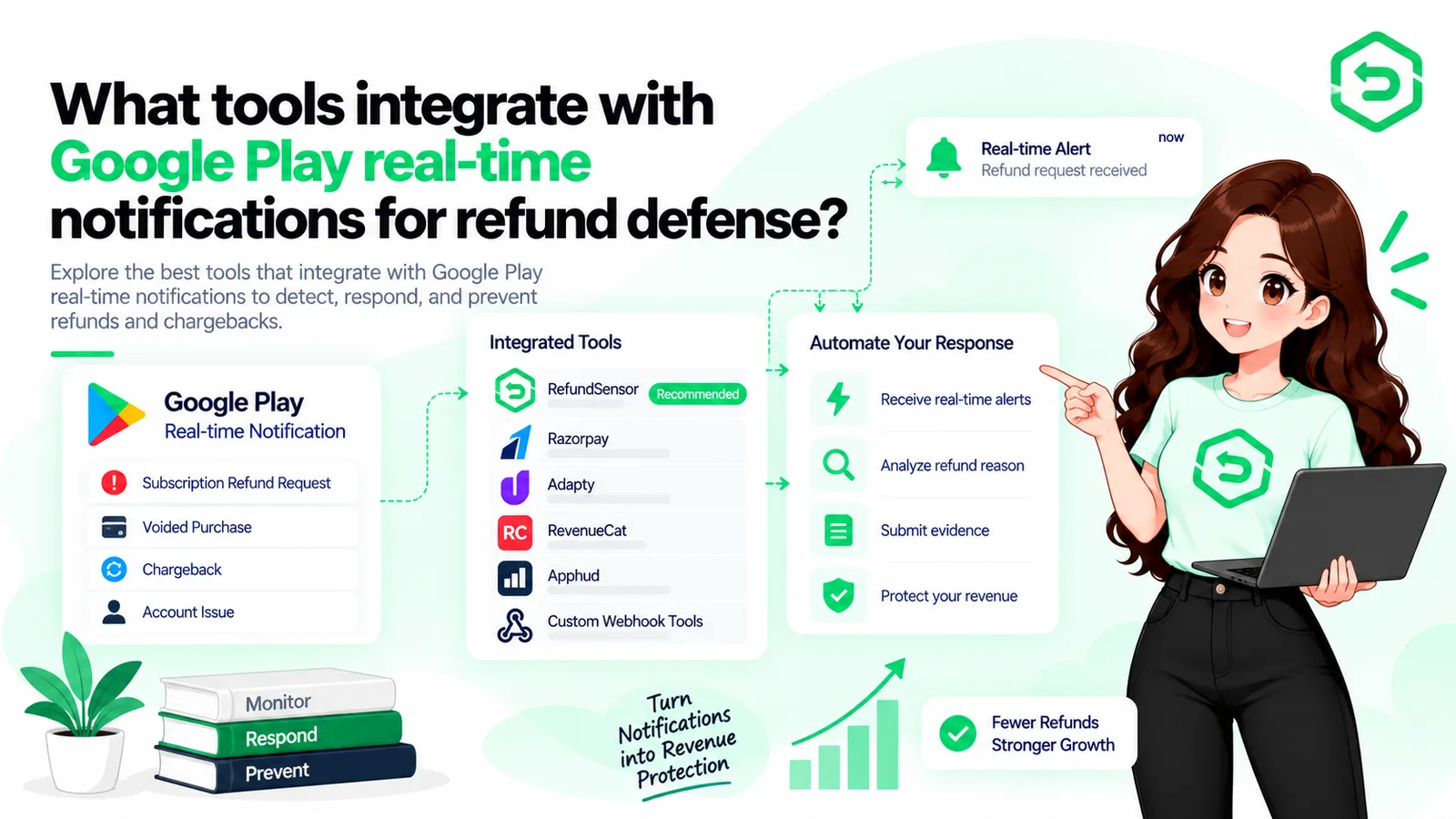
Monitoring means watching for reversals and risky events as they happen, so you act instead of finding out in a payout report. Google gives you two main tools: the Voided Purchases API and Real-time Developer Notifications.
You can monitor refunds and chargebacks through the Voided Purchases API, which lists purchases that were later voided. Notifications push subscription and billing events as they occur. Together they close the gap where money leaves unseen.
Manual Chargeback Management | Automated Monitoring |
Someone checks reports after payouts | Events are tracked as they happen |
Misses nights, weekends, and holidays | Runs around the clock |
Hard to tie disputes to a user | Records linked to each purchase |
Review windows missed under volume | Responses filed inside the window |
Scales only by adding people | Scales with transaction volume |
When Should Developers Automate Chargeback Management?
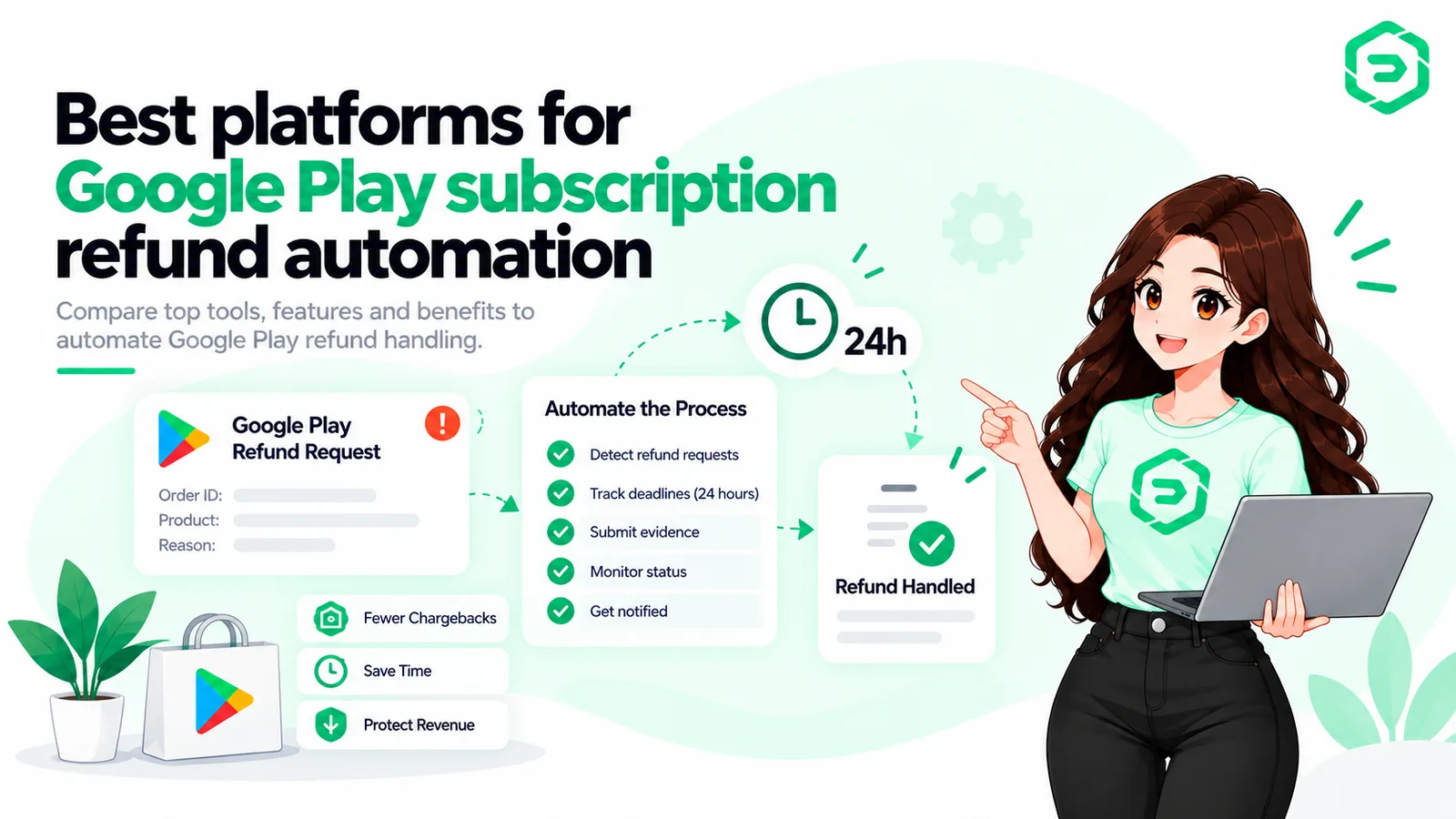
Automate when your volume makes manual handling unreliable. Review windows are short, notifications arrive at all hours, and one missed response is a full loss. Small apps can handle disputes by hand, but the tipping point comes when the cost of missed windows passes the cost of a system to handle them.
Key Insight Manual review fails not because teams are careless, but because the window does not wait. Automation is about showing up on time, every time. |
Responsible Use of AI in Chargeback Management
AI can help monitor patterns, flag risky accounts, and summarize billing events, but it should not replace official Google documentation or make final calls on policy. Verify billing and policy decisions against current Google docs. Automated systems should not assume a chargeback outcome or act on guesses. Use AI to surface signals, not to invent facts.
Final Thoughts
Chargebacks are part of selling subscriptions, but silent losses do not have to be. The work is to prevent the avoidable disputes, monitor the rest, and respond in time.
With the recent shift in who pays for chargebacks, the cost of ignoring them went up. Teams that treat prevention and monitoring as one system keep revenue the others quietly lose.
Frequently asked questions
It is a payment reversal a customer starts through their bank, not through Google. Google handles it as merchant of record, but since August 2026 the cost of a lost chargeback falls on the developer.
Not entirely. You cannot stop a customer from disputing a charge with their bank. You can reduce avoidable disputes with clear billing, catch risky events through monitoring, and contest the rest. Prevention means fewer, not zero.
They happen when a customer disputes a charge with their bank instead of asking you. Common reasons are an unrecognized charge, trial or renewal confusion, an accidental purchase, or fraud. Each cause has a different fix.
It is the practice of reducing avoidable disputes, monitoring reversals, and responding to billing events in time so fewer chargebacks succeed. It does not block chargebacks, since banks control them. It protects revenue by cutting preventable losses.
It covers the full cycle: preventing disputes, monitoring reversals through the Voided Purchases API and Real-time Developer Notifications, responding to review notifications in time, and keeping entitlement records accurate. Done well, it turns silent losses into events you can act on.
Yes, more than a single refund does. A subscription chargeback removes the sale, adds a bank fee, and erases the renewals you projected from that customer. It also adds support work and makes forecasting less reliable.
Yes. The Voided Purchases API lists purchases that were later refunded, charged back, or canceled. Real-time Developer Notifications push billing events as they happen. Together they let you spot reversals early and flag risky accounts.
Make billing terms clear before checkout, remind users before a trial converts, keep accurate purchase records, handle failed renewals with grace periods, and monitor reversals. Fast, evidenced responses then protect the disputes that still reach the bank.