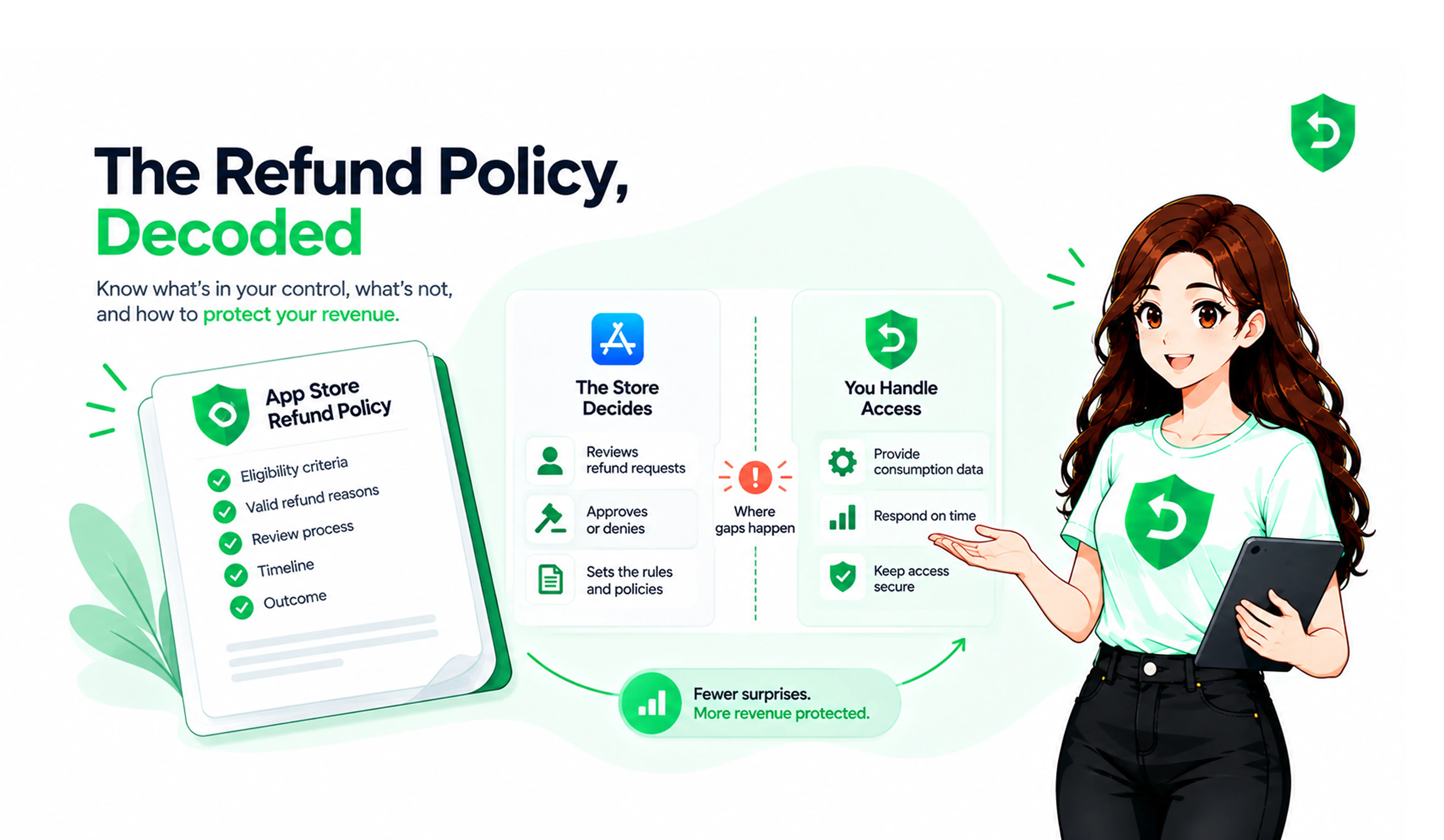

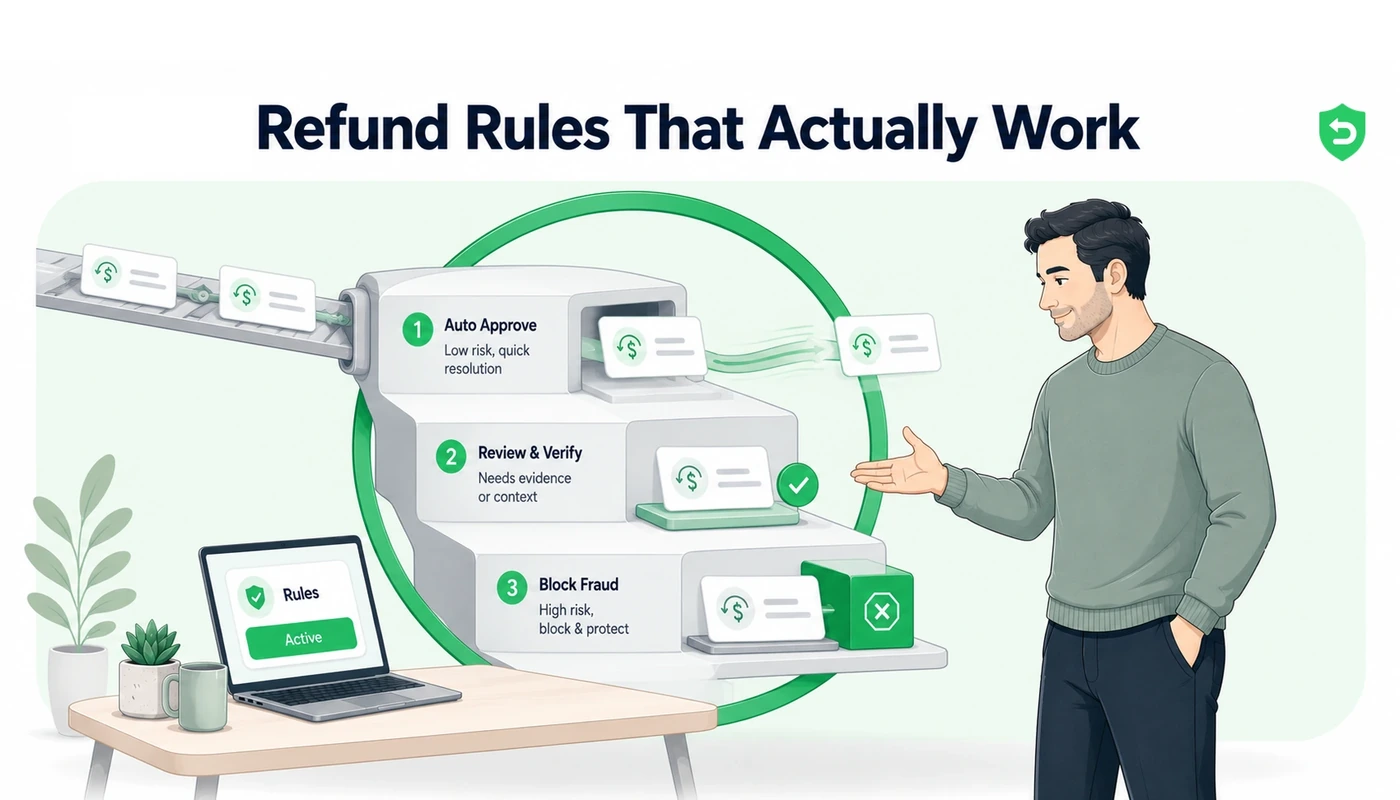
Building the plumbing is one problem. Deciding what the plumbing should say is another, and this is about the second one. Once your server is capable of answering Apple's consumption requests and Google's chargeback reviews, the reply itself needs to come from a policy rather than an instinct. Concede everything and refund farmers learn your name. Fight everything and you torch real customers over loose change. What works sits between those, as a short ladder treating different refunds differently.
Key takeaways
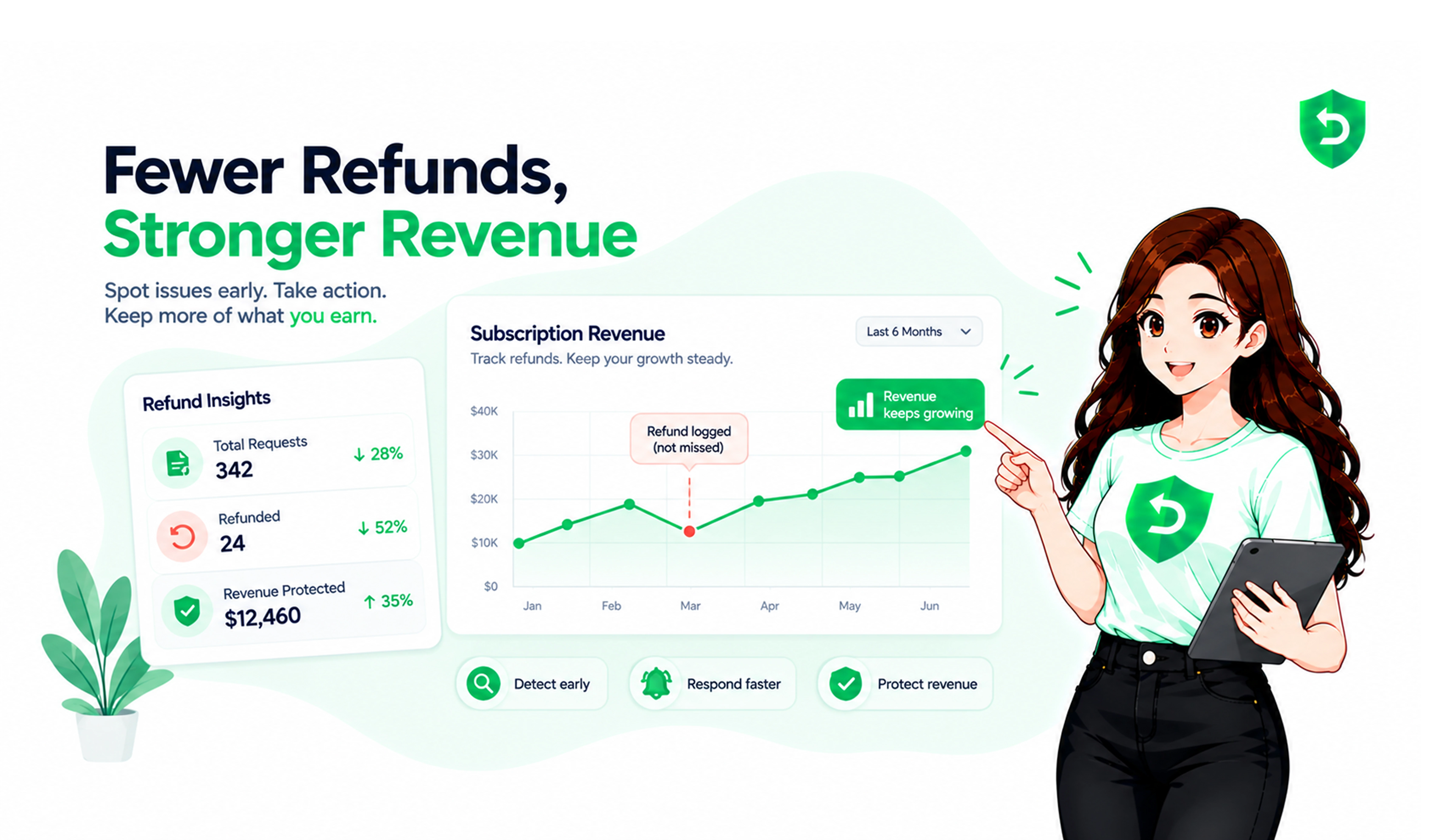
Measure before you legislate. App Store Connect and Play Console will each show you precisely how much revenue refunds are taking.
Fighting every request costs as much as ignoring every request. Disputing $2.99 with a first-time buyer purchases you a one-star review.
A ladder is the shape that works: concede quickly where goodwill is cheap, dispute with evidence where consumption genuinely happened, and always dispute the repeat offenders.
Evidence of usage is what elevates a decline preference from an assertion into an argument.
These rules need revisiting. Once save rate and review score are both visible and moving, the thresholds deserve another look.
Whatever the rules conclude, something automated rather than somebody human has to guarantee the reply lands before Apple's 12 hours or Google's 24 expire.
Contesting everything is the natural reaction to a first wave of refunds. It should be resisted. Stores assess your responses in aggregate, and customers you fight over trivial sums go and write one-star reviews. A ladder beats a reflex.
Start by measuring what refunds actually take
Tuning something unmeasured is not possible, and both stores put the figure somewhere obvious. App Store Connect keeps it under Trends: switch the measure over to Proceeds, narrow Transaction Type down to Refund, and the line you are left with is your monthly leak. Play Console keeps its version in the financial reports, which separate refunds and chargebacks order by order. Record that monthly number before altering any rule, because it is the baseline everything afterwards gets judged against.
While the reports are open, study the shape rather than only the total. Which products attract refunds, how much time passes between purchase and request, and how frequently the same buyers reappear. Those three dimensions are precisely what the ladder keys on.
A goodwill case looks like a purchase under $5, no recorded usage, and nothing refunded before. Concede it straight away.
Genuine consumption looks like several days of active use followed by an "unsatisfied" claim. Decline it, with the usage curve attached as evidence.
A repeat offender is any account with two or more lifetime refunds. Dispute every time, and submit the full history.
When you have nothing to go on and cannot match the buyer to any usage record, submit neutral evidence and a time-based estimate.
Concede quickly where goodwill costs little
A small purchase, no recorded usage, and no prior refund on that account is a case to concede. It costs a couple of dollars, the customer walks away with a decent impression, and your credibility improves for the disputes that genuinely matter. Expressed as a rule, something along the lines of price under $5 combined with zero usage and zero prior refunds resolving to grant will handle these without anybody looking.
Dispute with evidence where consumption genuinely occurred
Revenue leaks through the unsatisfied-after-heavy-usage pattern. Six days of daily engagement followed by a claim of dissatisfaction warrants a decline preference with the usage curve behind it. This is precisely the scenario consumption data was created to address, and precisely where automated evidence earns its place.
Dispute repeat refunders without exception
Refund farming is a real behaviour: one account cycling through purchase, consumption, and refund repeatedly. Track lifetime refunds per user across everything you publish, and stiffen your response once the count reaches two. Stores factor that history in as well, and your evidence is what makes it visible to them.
Tune the ladder rather than setting it and walking away
Let the rules run a month, then place two numbers beside each other: save rate and review score. Save rate climbing while reviews hold steady means you can tighten another notch, perhaps by dropping the goodwill price ceiling. Reviews slipping means your dispute threshold is catching genuine customers and should be loosened. One iOS prerequisite is worth keeping in mind throughout: Apple expects customers to have agreed, via your terms, that usage data can be shared before any of it gets sent.
Never let the deadline decide for you
The quiet failure across all of this is missing the response window entirely. Something has to guarantee an answer arrives while Apple's twelve-hour limit or Google's twenty-four is still open, and that something needs to be a system rather than a person. Refund Sensor exists to be that guarantee, applying whatever ladder you configure and filing the response inside the window every time.
Where these rules are documented
Frequently asked questions
No. Final decisions belong to the stores, and they observe your behaviour in aggregate. Conceding the cheap goodwill cases keeps customers content while making your decline preference more persuasive on cases where consumption really did happen.
Head to Trends inside App Store Connect, with the measure switched over to Proceeds and Transaction Type narrowed to Refund. Play Console carries the equivalent in its financial reports, broken out per order. Whatever monthly figure emerges is the baseline your rules need to beat.
Contesting the right ones will not. Someone who used a product for a week rarely writes a review about a declined refund. Angry one-star reviews come from fighting first-time buyers over trivial amounts.
Reply regardless. Delivery status and time-based estimates still constitute evidence, and any answered case beats an unanswered one. Real usage data can be connected later, and the quality of your responses improves automatically once it is.