
How to Prevent Google Play Chargebacks Before They Happen
Your payout looks fine on Monday. By Friday it is lighter, and no dashboard tells you why. A few Google Play chargeback reversals slipped in overnight, each one quietly pulling money and leaving the customer's access on. Nobody filed a ticket. The revenue just left.
This is the part that stings. Chargebacks do not feel like a problem until you add them up across a quarter. By then they are a line item, not an accident. If you want the full defense flow, our Google Play chargeback guide covers it, but this piece is about stopping them earlier.
This is not a shopper guide. This is how developers cut Google Play developer chargeback losses before the bank ever gets involved.
Key Takeaways
• A Google Play chargeback is a bank-initiated reversal, and since August 3, 2026, the cost lands on the developer.
• Prevention is cheaper than disputing, because bank fees are flat and hit hardest on low-price products.
• Most chargebacks trace back to unclear billing, weak fraud checks, or confusing subscription terms.
• Setting an obfuscated account ID on every purchase is the base layer of Google Play chargeback prevention.
• The Voided Purchases API is how you catch refunds and reversals your server would otherwise miss.
• Fast, evidenced responses to review notifications protect revenue you would lose by staying silent.
• Monitoring is not optional. What you cannot see, you cannot prevent or contest.
Why Chargeback Prevention Matters
Google Play chargeback prevention matters because every lost chargeback now costs you the sale price minus Google's service fee, plus a flat bank fee. On cheap products the fee alone can beat the sale. Prevention protects margin that disputing after the fact cannot fully recover.
Think about the math. A $2 in-app item that gets charged back can cost more in bank fees than it ever earned. Stack a few hundred of those across a year and the drain is real subscription revenue, not rounding error.
Analysis. Disputing helps, but it is reactive and never wins every case. Prevention is the only lever that reduces both the loss and the fee at the same time. That framing is our read, not a Google rule.
Key Insight Every chargeback you prevent saves the sale plus the bank fee. Every one you only dispute still costs you the fee, even when you win. Prevention protects margin that disputing cannot. |
What Causes Google Play Chargebacks?
Most Google Play chargeback cases come from three roots: the customer does not recognize the charge, the customer feels misled about billing, or the purchase was fraudulent. Each root has a different fix, and most are within your control before checkout.
Here are the common causes mapped to what actually reduces them:
Chargeback Cause | Prevention Strategy |
Customer does not recognize the charge | Use a clear billing descriptor and confirm purchases in-app |
Unclear trial or renewal terms | Show price, renewal date, and terms before checkout |
Accidental or unwanted purchase | Add a confirmation step and easy in-app cancellation |
Fraudulent or stolen payment | Verify accounts and flag risky purchase patterns |
Feature did not work as expected | Fix crashes fast and offer support before the bank |
The Google Play Chargeback Process
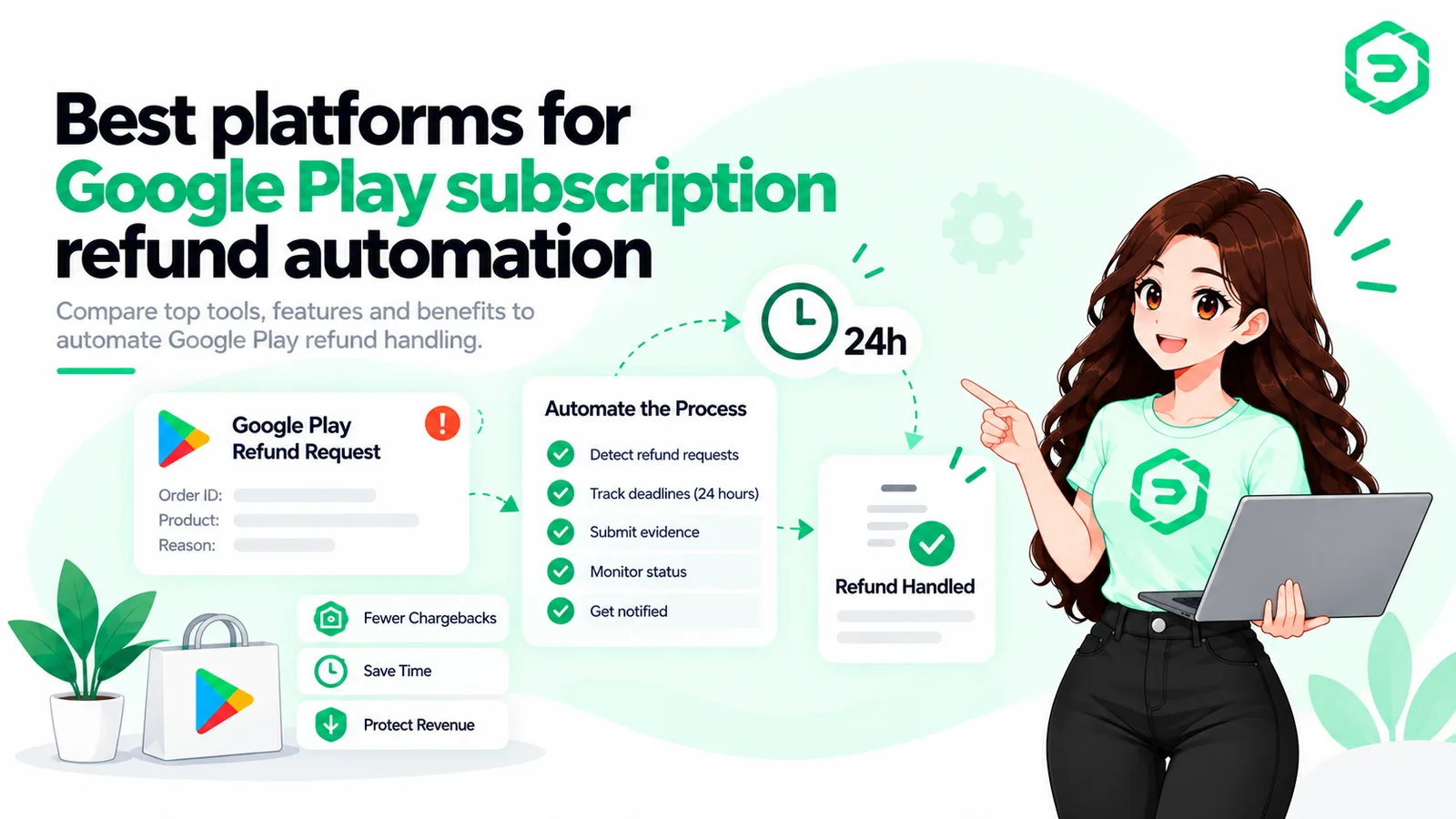
The Google Play chargeback process starts when a customer disputes a charge with their bank. Google, as merchant of record, reviews it. For cases that need your input, Google sends a PendingRefundReviewNotification over Real-time Developer Notifications, and you get 24 hours to respond with evidence.
Knowing the flow is what makes prevention possible. You cannot prevent what you do not understand:
1. The customer disputes the charge at their bank.
2. The bank routes the dispute to Google.
3. Google reviews its own signals on the purchase.
4. For review cases, Google sends a PendingRefundReviewNotification via RTDN.
5. You respond within 24 hours through the ReviewRefund API with your preference and usage evidence.
6. Google argues the case with the bank using what you sent.
Understanding how the chargeback cost shift works is worth your time, since it is why prevention now has a direct dollar value. Google documents the review flow in its official chargeback documentation.
How Developers Can Prevent Chargebacks Before They Happen
You prevent chargebacks by removing confusion, blocking fraud, and making purchases easy to understand and undo. Most prevention happens before checkout, not after the dispute. The goal is simple: give the customer no reason to call their bank instead of you.
Practical steps that move the number:
• Set an obfuscated account ID on every purchase so any dispute maps to a real user.
• Show price, trial length, and renewal date clearly before the buy button.
• Use a recognizable billing descriptor so the charge is not a mystery on a statement.
• Add a confirmation step for high-value or accidental-prone purchases.
• Offer fast in-app support and easy cancellation so unhappy users reach you first.
• Log usage with timestamps and IPs from day one, so evidence exists if a dispute happens.
Example. An app that shows the renewal date on the paywall and confirms the charge in-app sees fewer I did not authorize disputes. The customer knew what they bought, so the bank call never happens.
Common Developer Mistakes That Increase Chargebacks
The mistakes that raise chargebacks are usually invisible: no account ID on purchases, hidden renewal terms, no refund monitoring, and no automated response to review notifications. Each one quietly increases either the volume of disputes or the losses you take from them.
Developer Mistake | Chargeback Risk | Recommended Action |
No obfuscated account ID | Disputes cannot be matched to a user | Set the account ID on every purchase |
Hidden renewal or trial terms | More I did not authorize claims | Disclose terms before checkout |
No refund monitoring | Losses go unseen and uncontested | Poll the Voided Purchases API |
Ignoring review notifications | Automatic loss with no argument | Automate the 24-hour response |
Access stays on after refund | Refunded users keep paid content | Revoke entitlements on reversal |
Key Insight Silence is the most expensive setting. A dispute you never see and never answer is billed to you in full. Monitoring plus an automated response turns silent losses into contested ones. |
How Refund Monitoring Helps Protect Revenue
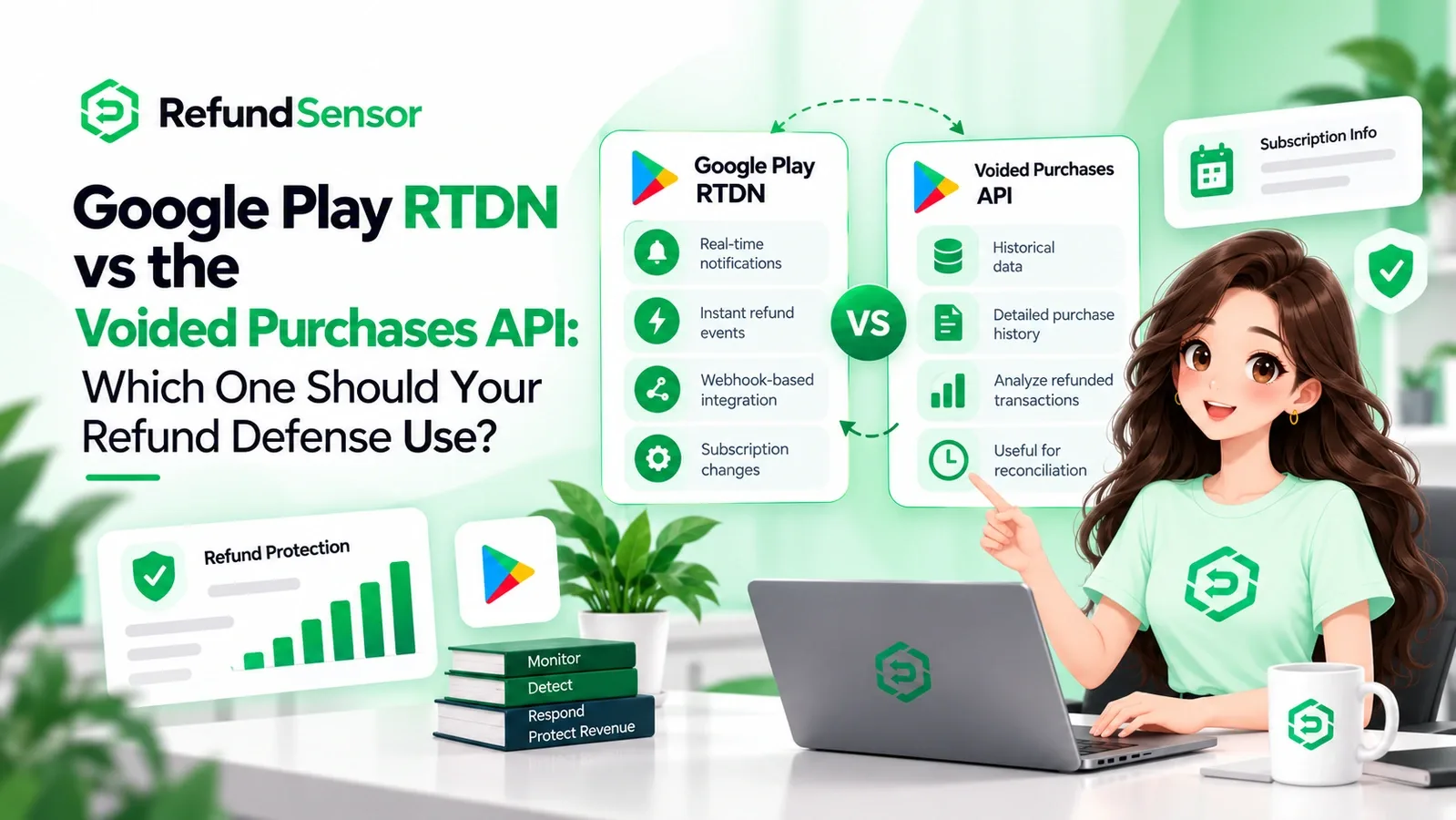
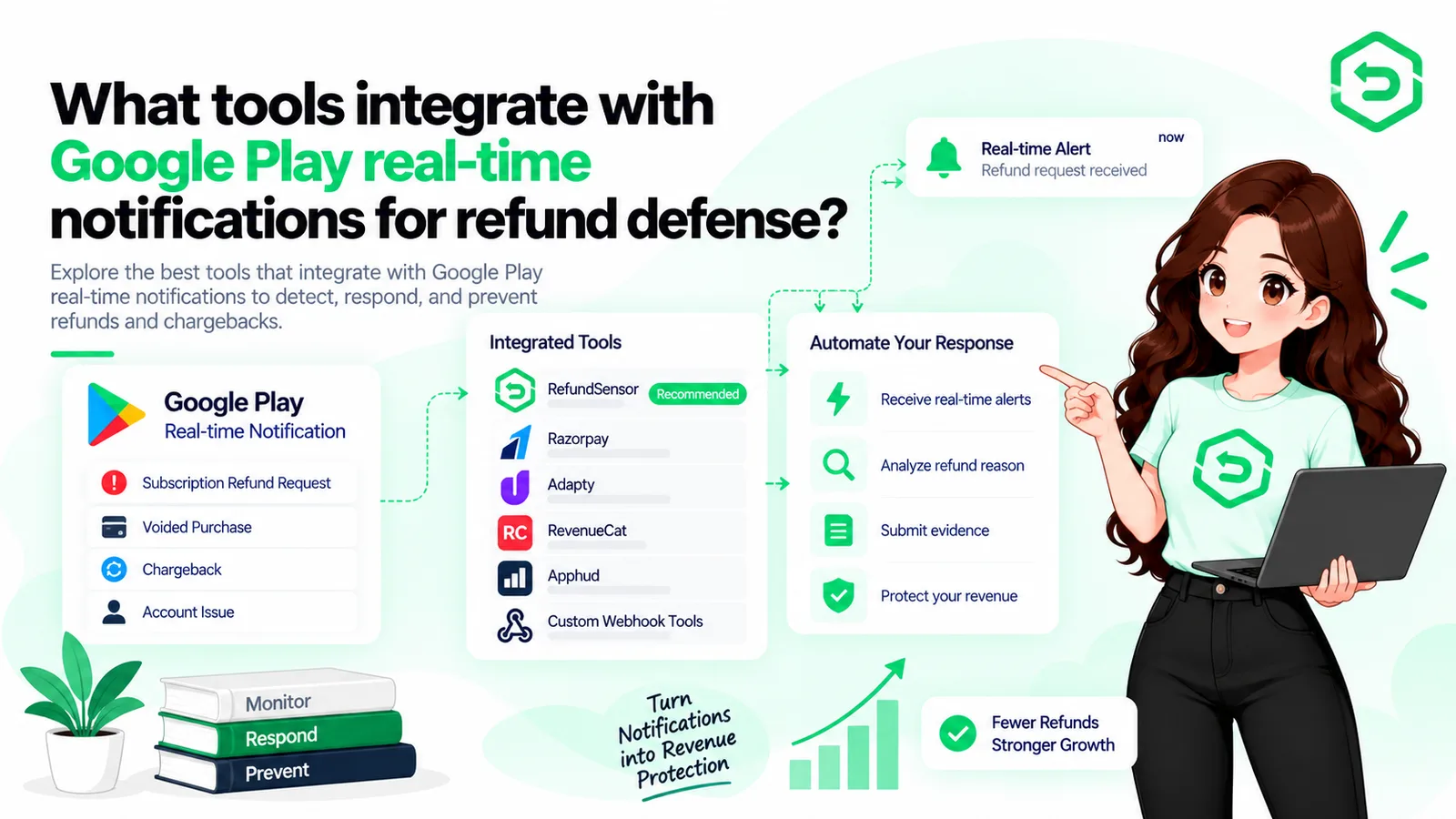
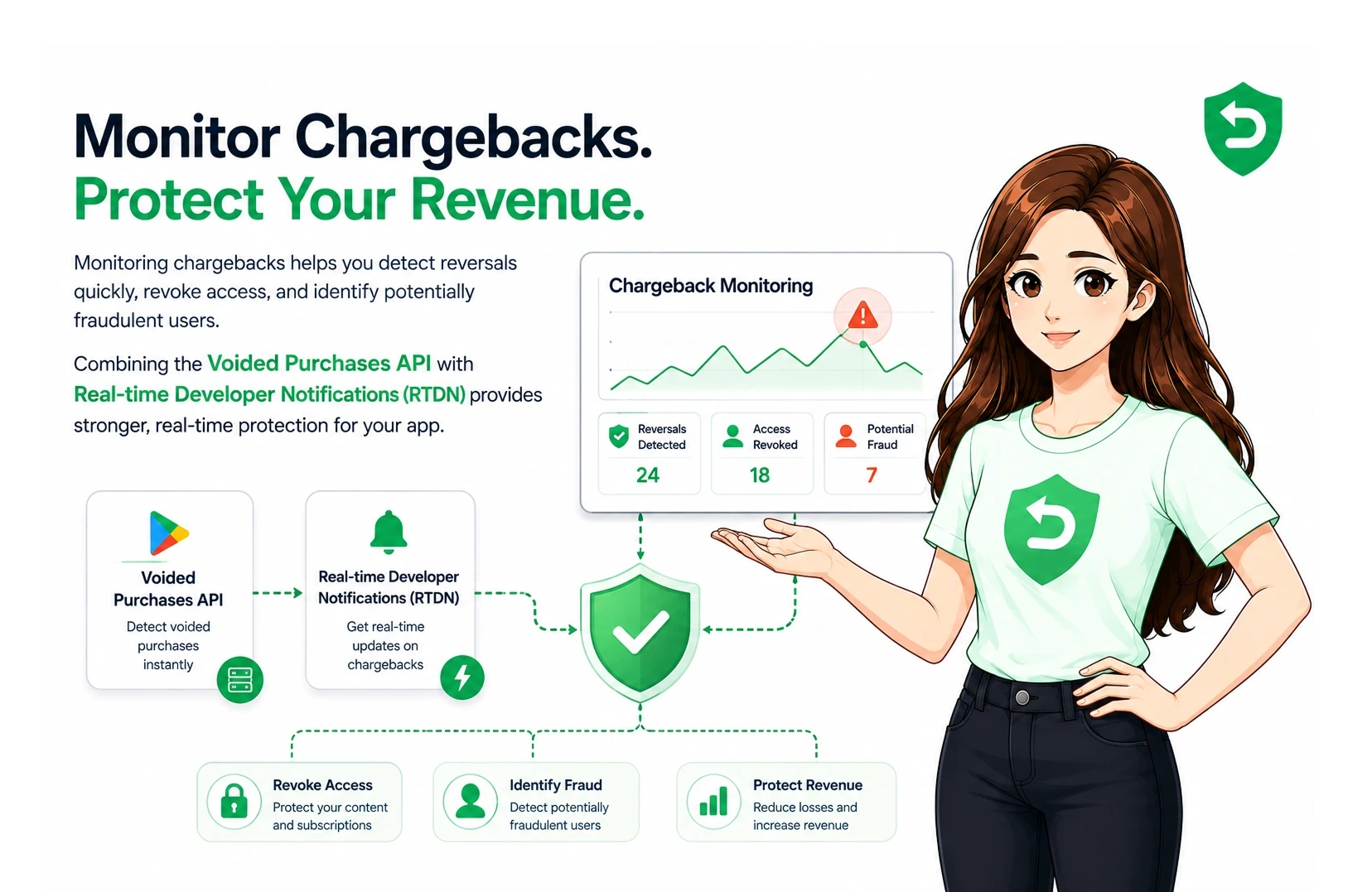
Refund monitoring protects revenue by making reversals visible so you can react. The Voided Purchases API lists refunds and chargebacks for your app, and Real-time Developer Notifications push events as they happen. Together they close the gap where money leaves without a trace.
A refund on Google Play can reverse a charge while the customer keeps access, so monitoring is how you learn to revoke entitlements and stop serving revenue you no longer have.
Revenue protection is not just about winning disputes. It is about catching reversals early, cutting off free access, and spotting repeat refunders before they cost you again. You can read Google's field-level reference in the Play Developer API documentation.
Example. Your job polls voided purchases each hour. It finds a reversal, revokes the entitlement, and flags the account. The next purchase from that account gets an extra check. That loop is prevention feeding on monitoring.
Best Practices Checklist
Use this as a working checklist. Each item removes a common cause of chargebacks or a common reason developers lose them.
Google Play Chargeback Prevention Checklist |
☐ Set an obfuscated account ID on every purchase |
☐ Show price, trial length, and renewal date before checkout |
☐ Use a clear, recognizable billing descriptor |
☐ Add a confirmation step for accidental-prone purchases |
☐ Subscribe to Real-time Developer Notifications for all types |
☐ Poll the Voided Purchases API on a schedule |
☐ Automate the ReviewRefund response inside the 24-hour window |
☐ Log usage with timestamps, IPs, and coarse location |
☐ Revoke entitlements when a refund or chargeback lands |
☐ Track repeat refunders and add friction to risky accounts |
Final Thoughts
Chargebacks are not random. They follow patterns you can see, and most trace back to confusion or a gap in monitoring. Fix the confusion before checkout and watch the reversals after it, and the number drops.
Prevention and defense work together. Clear billing cuts the disputes you get, and reclaiming access after a reversal stops the ones that slip through from costing you twice. The teams
that treat this as a system keep the subscription revenue the rest hand back quietly.
Where These Rules Are Documented
These are the primary sources behind the factual claims above. Official Google documentation only, no third-party blogs.
• Google Play Console Help: refund and chargeback cost responsibility
• Google Play Billing: Help Google dispute chargebacks
• Google Play Developer API: Voided Purchases API reference
References
• Google Play Developer Documentation
• Google Play Billing Documentation
Frequently asked questions
A Google Play chargeback happens when a customer asks their bank to reverse a payment instead of requesting a refund through Google Play. If the dispute is lost, the amount is deducted from the developer's revenue.
Prevent chargebacks by clearly showing pricing and renewal terms, verifying risky purchases, and providing easy support and cancellation. Using an obfuscated account ID also helps identify disputed purchases.
Most chargebacks occur because customers do not recognize the charge, misunderstand billing or subscription renewals, or because of fraudulent payments. Clear communication before checkout helps reduce disputes.
The Voided Purchases API lets your server detect refunds and chargebacks for your app. It helps you revoke access quickly and identify repeat refund abuse.
Yes. Clear subscription pricing and renewal information reduce disputes and protect recurring revenue. Early monitoring also helps stop repeat chargebacks
A lost chargeback usually costs the purchase amount (minus Google's service fee) plus a bank chargeback fee. For low-priced items, the fee can exceed the original profit.
Yes. Developers can respond to a pending chargeback through the ReviewRefund API within 24 hours and provide evidence. However, preventing chargebacks is usually more effective than disputing them.
Monitoring chargebacks helps you detect reversals quickly, revoke access, and identify fraudulent users. Combining the Voided Purchases API with Real-time Developer Notifications improves protection.